



Introducing SkySparq
Today, we are excited to introduce SkySparq, our Snowflake Native App built from the ground up for AI and BI teams.
At its core, SkySparq delivers high-fidelity, NOAA-derived weather intelligence directly into your data stack, allowing teams to focus on insights rather than being concerned about ingestion, transformation, or accuracy.
Why We Built SkySparq
Weather shapes nearly every aspect of operations, from supply chains and risk modeling to infrastructure and retail planning. Yet for most data teams, weather remains difficult to integrate effectively. We identified three recurring friction points and worked to solve them.
1. Weather data is inconsistent, with multiple formats, units, and missing values.
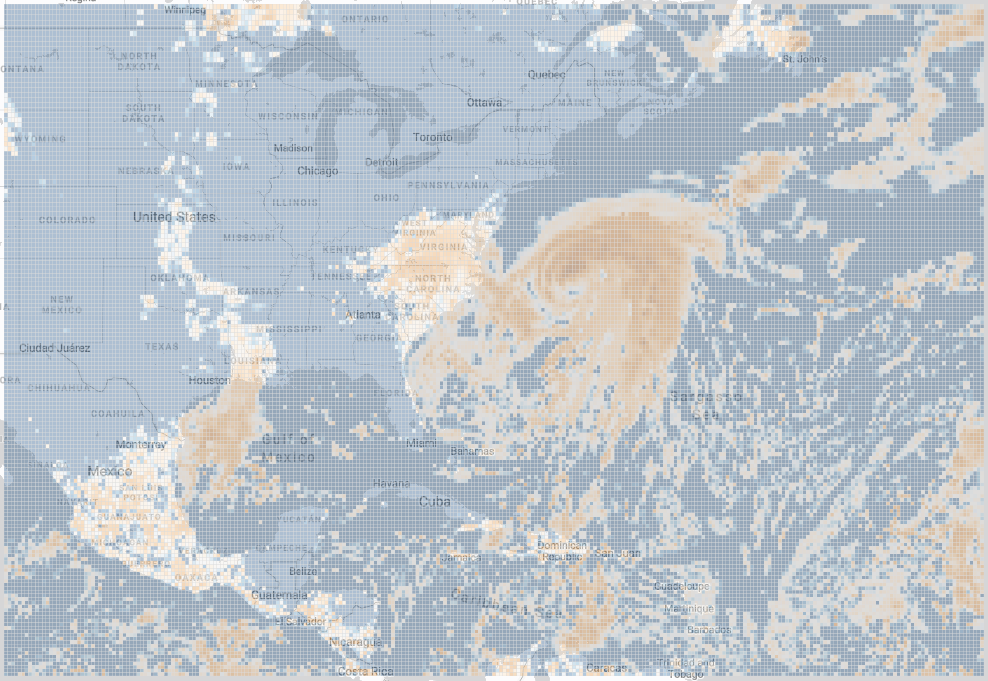
SkySparq recognizes that weather data is messy and rarely ready for analytics or AI. We solve this by delivering clean, harmonized NOAA datasets, starting with NOAA’s Global Forecast System (GFS), that are standardized and directly queryable inside Snowflake— no manual transformation required.
2. Integration is tedious, requiring custom pipelines and manual updates.
SkySparq was built on the principle of being warehouse-native so users can access weather data instantly within Snowflake. This eliminates the need for separate ingestion pipelines, APIs or ETL, and supports direct integration with agentic tools like Snowflake’s Cortex and AI/BI platforms like Sigma.
3. It is rarely optimized for AI or modern analytics workflows.
SkySparq ensures that forecasts and historical data remain current and reliable, updating automatically as new NOAA data becomes available. Our roadmap extends this further by integrating additional high-resolution models (more on that below), ensuring continuous accuracy and freshness for operational and AI workflows.
What SkySparq Delivers
- NOAA-backed accuracy, using verified datasets that are aligned, cleaned, and continuously updated.
- Warehouse-native access, enabling data teams to query and join weather data directly inside Snowflake or their preferred platform.
- AI-ready structure, with consistent time series data, derived features, and schema alignment designed for both analytics and model training.
- Enterprise-grade governance, including version control, lineage, and security built into every dataset.
How It Works in Practice
- The data team enables the SkySparq connector in their Snowflake environment.
- The data team ingests weather data features such as precipitation, wind speed, and temperature anomalies for analysis.
- Analysts and data scientists can instantly query, filter, and join weather context into existing dashboards or models, enabling the integration of weather data alongside their business data.
- The results include richer forecasts, more resilient operations, and proactive insights across the business.
SkySparq transforms weather from a background factor into a measurable signal that drives smarter analytics.
Early Use Cases
- Supply chain and logistics: anticipating weather-driven disruptions and adjusting routing in advance.
- Insurance and risk management: enhancing exposure models and claims forecasting with contextual weather layers.
- Telecommunications and infrastructure: predicting service degradation under severe conditions.
- Retail and demand forecasting: refining sales projections using environmental context.
Each of these applications benefits from accurate, timely, and ready-to-use weather data.
Our Forecast for SkySparq
This launch marks version one of SkySparq, and we are just getting started. Today’s release includes NOAA’s GFS data, making high-quality forecast information instantly accessible inside Snowflake.
Next, we will be prioritizing expanding coverage with additional datasets, including:
- High-Resolution Rapid Refresh (HRRR), a high-resolution forecast for the Continental United States and Alaska generated hourly.
- Global Data Assimilation System (GDAS), a global model of actual conditions derived from observations.
- Multi-Radar Multi-Sensor System (MRMS), near-real-time weather conditions derived from Next Generation Weather Radar (NEXRAD) data.
These sources will provide even greater temporal and spatial precision, enabling customers to layer multiple atmospheric views in a single environment using the same Snowflake Native App.
Our team is also developing a suite of plug-and-play AI and BI products that will make it easier for organizations to operationalize weather intelligence immediately, without heavy configuration or model development. We target this to complement the product at no additional cost for our customers.
Stay tuned for updates as we continue to expand what SkySparq can do.
Try It for Yourself
SkySparq is available now on the Snowflake Marketplace! Start with a free trial and get connected today.
We’ve made getting started with SkySparq seamless, but also are happy to schedule a demo for your team to see how SkySparq fits into your stack.
If you are ready to make weather a true part of your analytics strategy, we would be glad to show you how.